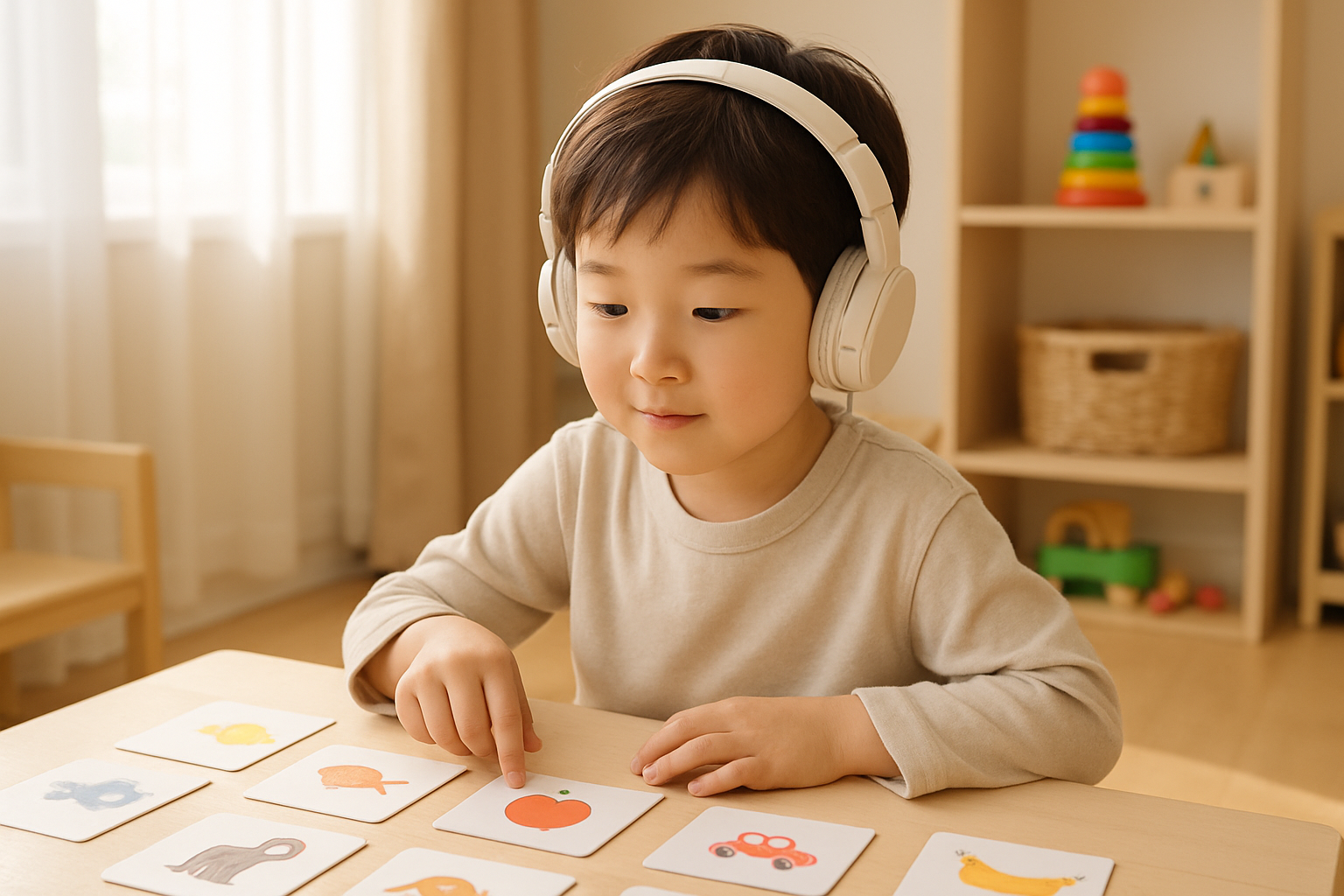
They giggle while watching videos and close the door when told, "Close the door." But when asked to speak in English, they firmly shut their mouth. Should you worry about this or wait? The answer depends on what kind of silence it is.
- If responses showing understanding—following instructions, laughing, and nodding—continue to increase, learning is building even without speech.
- If even responses showing understanding do not increase, or the child begins avoiding English activities themselves, it is a sign to take a closer look.
- Children begin speaking through low steps, not pressure: repeating → choice-based answers → talking to themselves.
The Same Silence, Two Different States
Silence That Is Building
When learning a new language, children’s understanding develops far ahead of their expression. There is a period when they may appear quiet while the amount they hear and understand builds. This silence is not a deficit but an accumulation. The distinguishing sign is an increase in responses showing understanding. If they understand more instructions, laugh at the funny parts of videos, and hum songs, they are headed in the right direction.
Blocked Silence
By contrast, if responses showing understanding have remained unchanged for months and the child has begun avoiding English activities themselves, the situation is different. The content may be too difficult, an experience of being forced to speak may have remained a burden, or the amount of exposure itself may be insufficient. At this point, adjustment is needed rather than waiting. Lower the difficulty by one level, pause requests to speak for a while, and switch the exposure to subjects the child enjoys.
Pressuring a child is putting them onstage,
while steps let you climb while holding their hand.
Low Steps Toward Speaking
If the silence is building, lay out steps beginning with speech that cannot fail instead of open-ended questions such as "Say it in English."
The key to each step is that there is a set correct answer, so there is no fear of failure. For when to move on to Step 4 and how to use video lessons, continue with Comparing Video English and Tablet-Based English.
The First Words Do Not Come at a Planned Moment
Many parents describe a similar experience: their child had never spoken when prompted, but one day an English sentence suddenly came out during play. The first words emerge not on a prepared stage, but at a moment when the pressure has disappeared. The parent’s role is not to bring that moment forward, but to maintain an environment in which it can arrive.
Do Not Tell Them to Speak
Instead, ask just one choice-based question this evening: "Apple or banana?" If they answer, the steps are working. If there is still no answer after several days, lower the difficulty and stop asking them to speak for 2 weeks. As long as responses showing understanding are increasing, this silence is not a deficit but an accumulation.
Frequently Asked Questions
Look at the direction rather than the duration. If responses showing understanding continue to increase, the child is on a normal track even without speaking. If even those responses do not increase, it is time to review the difficulty and method of exposure.
Open-ended demands can easily backfire. Start with speech that has a set correct answer, such as choice-based questions, singing along with a chorus, or reading repeated sentences together.
It can be a good stage for a child who can manage low-level speaking tasks such as repeating and giving choice-based answers. But if they begin while not speaking at all, they may only repeat the experience of remaining silent. Start it after they have climbed a few steps.