This is the first crossroads most parents encounter around age 7. People around them say, “Phonics is fundamental,” while some books say, “Listening comes first.” To start with the conclusion, this debate is about order, not an either-or choice. And the principle for deciding the order is surprisingly simple.
- Phonics is the skill of turning letters into sounds. For those sounds to mean anything, the child must already know them.
- So the order is to fill the sound bank first through listening, followed by phonics.
- Decide when to start based not on age, but on three signs of readiness.
What Phonics Needs to Work
There are two kinds of children who sound out “c-a-t” using phonics. One says “cat” aloud and thinks of a cat; the other says “cat” but does not know what it is. For the first child, phonics is the key that opens the door to reading. For the second, it is practice combining meaningless sounds.
The difference is not phonics ability, but the sound bank. A child who has built up enough words already known by ear connects letter rules with familiar sounds as soon as those rules are learned, and reading improves explosively. Phonics with an empty sound bank creates the most frustrating situation for parents: the child progresses through the material, but reading does not improve.
Phonics is a key.
For the key to be useful, there must be a room it can open: familiar sounds.
Three Signs That a Child Is Ready to Start Phonics
If you see all three signs, the child is ready to start regardless of age. Conversely, if the signs are absent, building up listening exposure before buying phonics materials will ultimately be faster. For how to create that exposure, see Setting Up Tools for Parent-Led Learning.
If You Already Started with Phonics
There is no need to go back. Shift to doing both by reducing the amount of phonics enough to maintain it while adding a larger share of listening exposure. As the sound bank fills, rules already learned connect with familiar words, and stalled reading begins to move forward. If the symptom was “the child can read but does not know what it means,” changes are often visible within a few weeks.
Moving Quickly Through Material Is Not the Same as Growing
The phonics-first course shows fast, visible progress, putting parents at ease. The listening-first course can be unsettling because it looks as though the child is learning nothing for several months. But when the transition to reading arrives, the speeds of the two courses reverse. The path that feels unsettling is generally the right one.
If Your Child Cannot Name 10 Words from Pictures, Do Not Buy Phonics Materials
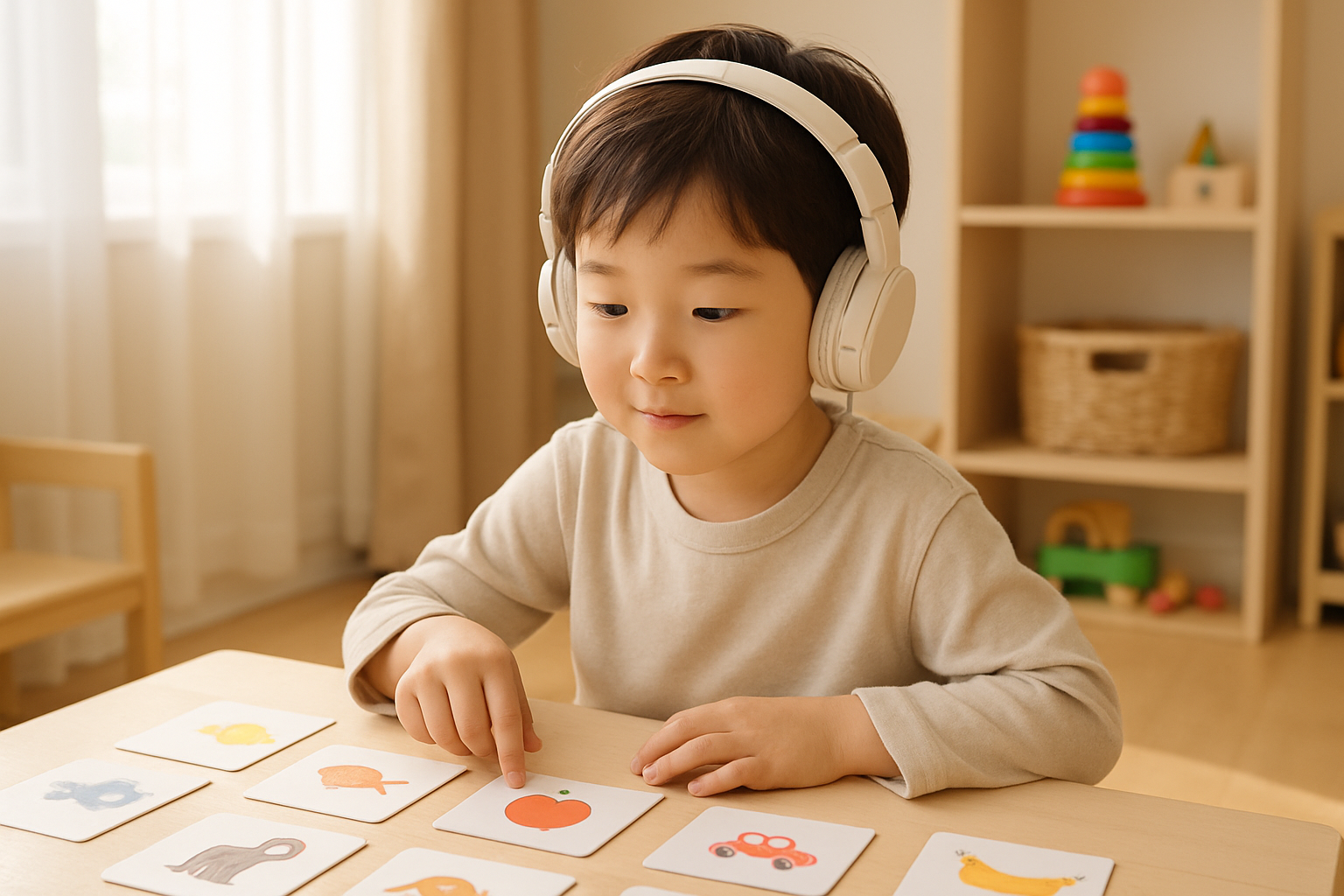
Start with 20 minutes of listening exposure each day beginning today. Naming words from pictures, repeating expressions, and showing interest in letters. Starting phonics on the day these three signs appear is not late at all, and phonics started then progresses faster.
Frequently Asked Questions
Judge by the signs rather than the length of time: naming words from pictures, repeating expressions, and showing interest in letters. When all three signs appear, the child is ready regardless of age.
Adjust the proportions rather than stopping. Maintain phonics at a reduced amount and add substantially more listening exposure. As the sound bank fills, progress will actually accelerate.
Listening exposure does not conflict with it. If learning two writing systems at once—Korean and phonics—is burdensome, it is natural to divide the roles by stabilizing Korean first while building English through exposure to its sounds.