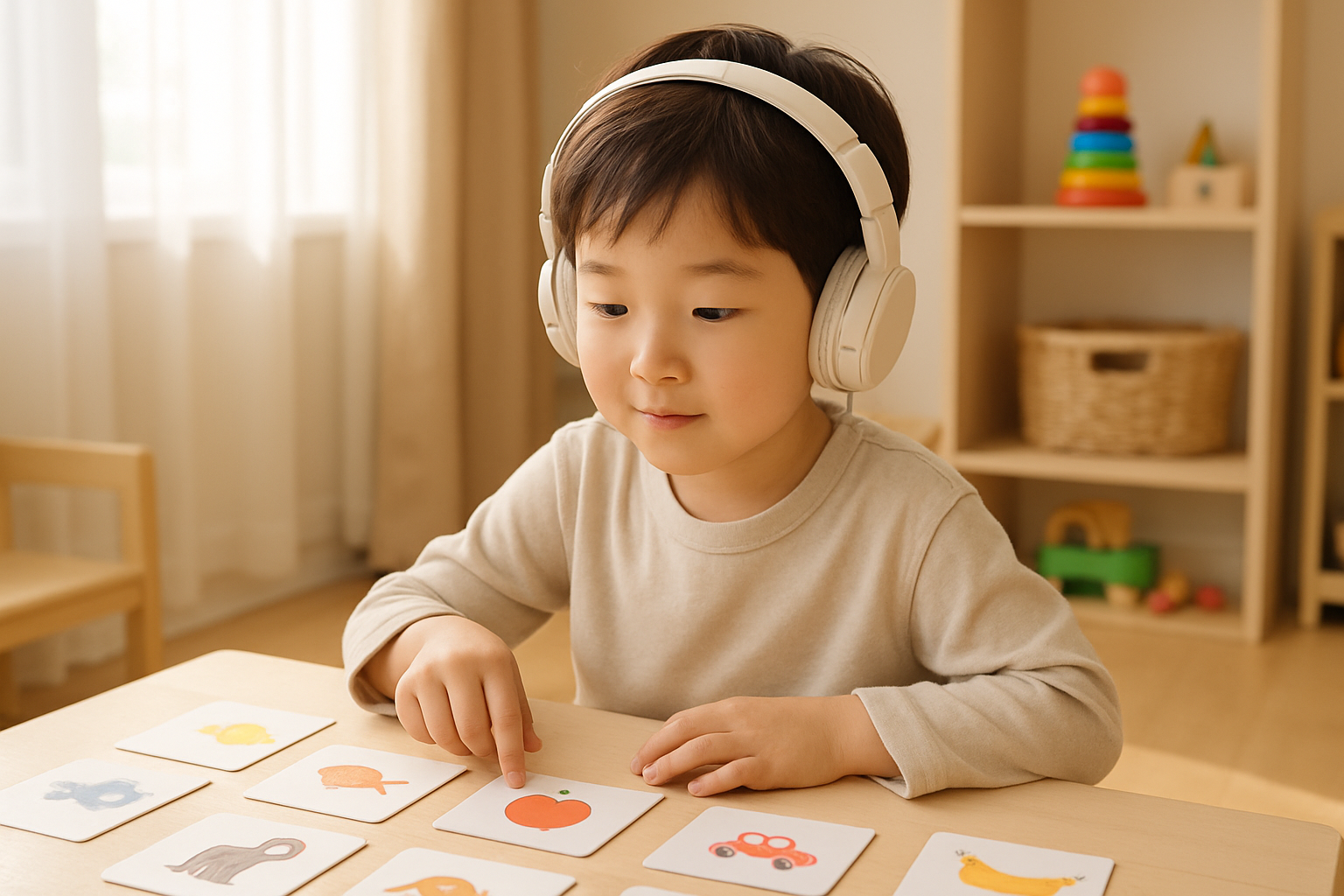
The question, "How can I do parent-led English when I'm not good at English?" contains a hidden assumption: that the parent must act as the teacher. But when you look at families that sustain parent-led English over the long term, it continues not because the parents are good at English, but because they manage it well. The audio, videos, and books do the teaching, while the parent is the person who keeps them running every day.
What parent-led English requires is not the parent's English ability, but three moments: a hand that turns on the audio in the morning, a hand that sets out a picture book in the evening, and a hand that writes down one line about the child's response on Sunday. Native-speaker audio can provide models of pronunciation and grammar, and three tools are enough: passive-listening audio, picture books, and short videos.
A Parent's Day Only Needs Three Moments
Moment One: The Person Who Turns On the Audio in the Morning
The moment you start wondering every day, "When should we do it today?" parent-led English begins to fall apart. Fix the time by attaching it to an existing routine, such as 10 minutes after getting ready for school or 20 minutes after dinner. This lasts much longer than creating a new time slot.
Moment Two: The Person Who Sets Out a Book in the Evening
Have the audio ready to play, keep picture books within reach, and decide on a list of videos to watch. The parent's second task is to keep the child from wondering, "What should I do?" The more open the options are, the more likely the child is to choose something other than English.
Moment Three: The Person Who Takes Notes for 5 Minutes on Sunday Night
Which book made the child laugh, which video they watched twice, and which day they resisted. This record tells you what to buy next and whether to raise or lower the difficulty. This requires observation, not specialized knowledge.
A child's pronunciation model is not the parent,
but the sounds the child hears most often.
Dividing the Roles of the Three Tools
There is no need to buy many tools. Each of the three types develops a different skill.
What matters is the order. The temptation to start with learning letters and phonics is strong, but learning letters before the sounds become familiar is like building a house on sand. The question of whether sounds or letters should come first is covered separately in Phonics First, or Listening First?.
What Level of Parental Involvement Is Right?
Each family has a different amount of time available, so divide the level of involvement into three stages and choose the one that fits your situation.
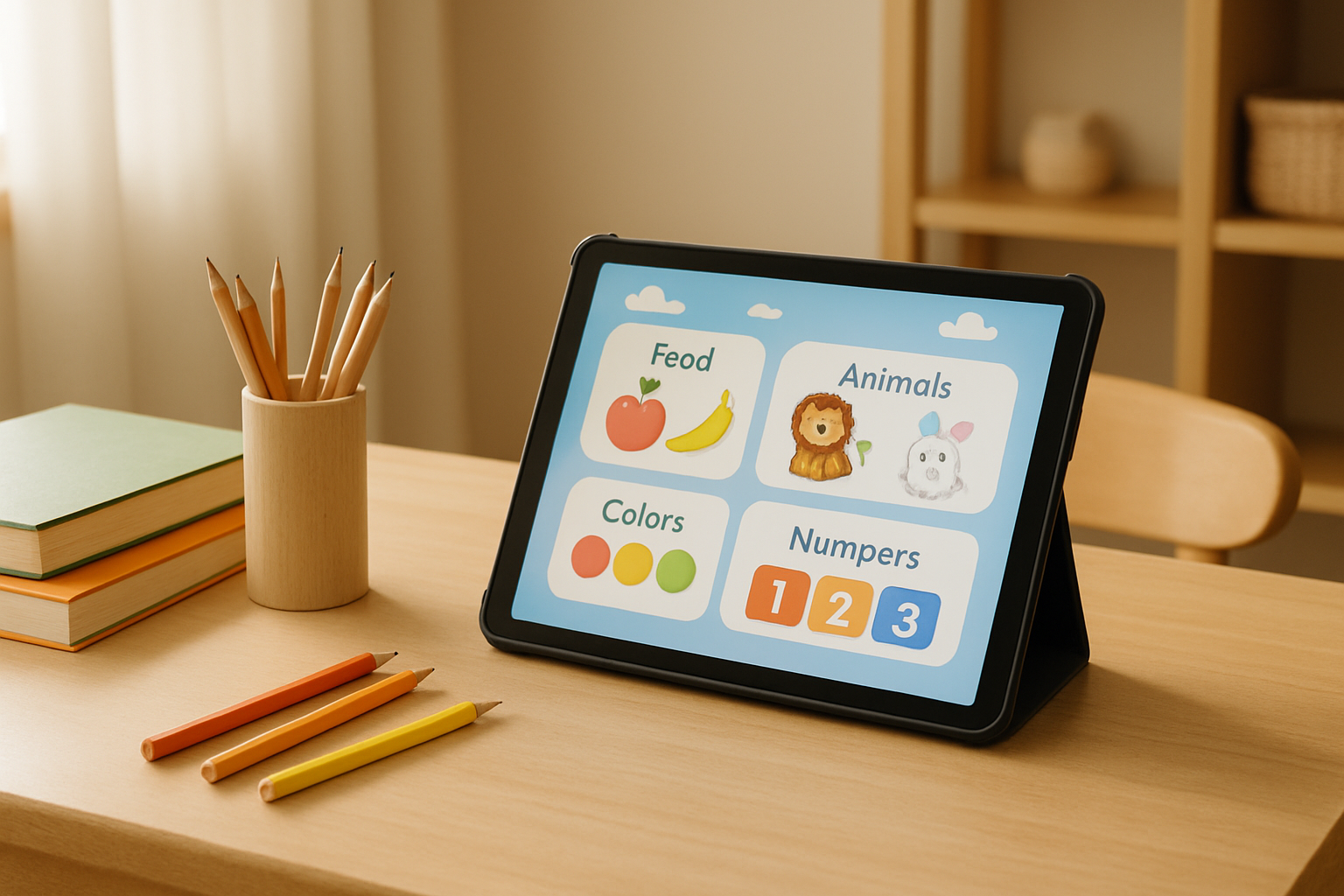
If the third or fourth applies to you, parent-led English alone will be difficult. How to create a structure that runs without a parent is covered in An English Routine That Runs on Its Own, and options for supplementing the tools with a program continue in Tablet-Based English Comparison.
Parent-Led English That Lasts, Rather Than Perfect Parent-Led English
Families that maintain 20 minutes a day, 5 days a week, for a year see better results than families that try to do everything perfectly every day. Instead of blaming yourself for missing a day, restart at the usual time the next day. That is all there is to managing it.
Choose the Place Before Buying Learning Materials
There are only two things to do this week: set aside 10 minutes after getting ready for school as audio time, and place two picture books on the living room table. If the child sits in this place for 2 weeks, it will not be too late to choose learning materials and a program then.
Frequently Asked Questions
A child's pronunciation model is the sound they hear most often. If native-speaker audio and videos account for most of the child's exposure, the parent's pronunciation has almost no influence. The purpose of the parent speaking aloud is not to provide a model, but to create an atmosphere of doing it together.
Asking is a good sign. However, translating every sentence prevents the child from developing the ability to infer meaning. Point to the picture and ask the question back; if the child is still curious, a brief explanation is appropriate.
Frequency matters more than quantity. Doing 20–30 minutes every day is better than cramming 2 hours into the weekend. Start with 10 minutes of passive listening plus 10–15 minutes of a book or video, and increase it only when the child wants to.