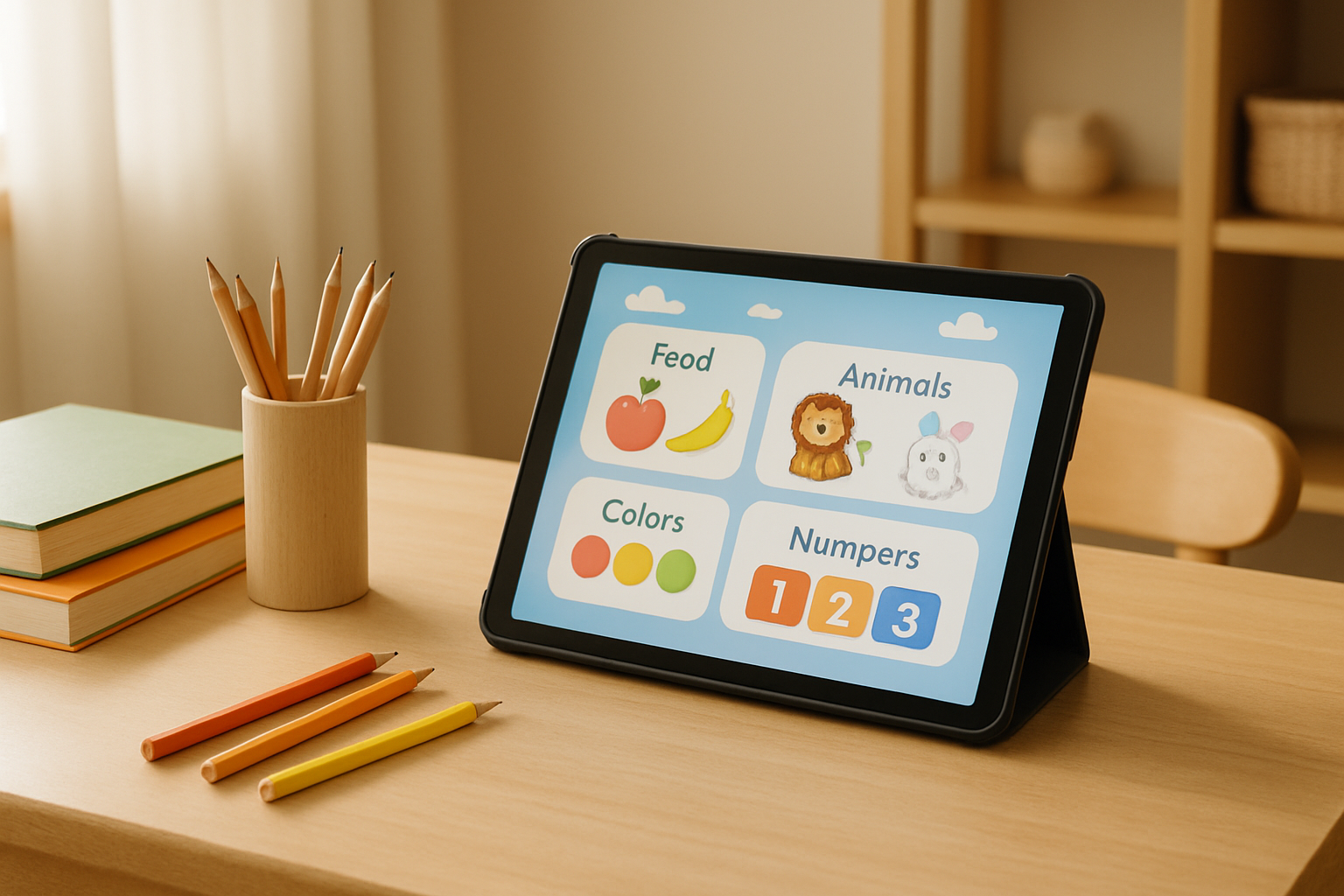
A consultation for video English lessons emphasizes one-on-one conversation with a native-speaking teacher, while a consultation for tablet-based English emphasizes the volume of content and AI-powered management features. Both are true, but one condition must be met for those features to be meaningful for your child. Whether your child actually begins to speak within that structureis what matters.
- The essence of video English lessons is having “someone you have to answer.” The pressure of real conversation is both an advantage and a barrier to entry.
- The essence of tablet-based English is “repetition where mistakes are okay.” The pressure is lower, but there is no real conversation partner.
- For a shy child, it is effective to first build up material on a tablet and then move on to video lessons.
Both Are Called “Speaking Practice,” but Their Structures Are Opposites
Video English Lessons: There Is Someone You Have to Answer
It is no exaggeration to say that the fact that there is a person on the other side of the screen is everything in video English lessons. When a question comes, the child has to answer something, and that pressure builds real-world speaking skills. For the same reason, however, there is a barrier to entry. For a child with nothing to say, a video lesson can become a 25-minute exercise in silence.
Tablet-Based English: No One Is Watching When You Make a Mistake
The strength of tablet-based learning is repetition. There is no partner who gets bored when the child repeats the same sentence ten times, and there is no embarrassment if the pronunciation is unclear. Most forms of practice—from exposure to sounds and repeating aloud to recording—can be done independently. However, it is structurally difficult to create the experience of responding to unexpected questions.
A Shy Child’s Silence Is Often Not a Personality Issue,
but a sign that the child has nothing to say.
When You Design the Sequence, the Two Methods Are Not Competitors
The most common failure is putting a child with nothing to say straight into video lessons. Conversely, the greatest missed opportunity is when a child has built up plenty of expressions through tablet-based learning but continues only repeating them without a real-world setting. That is why we recommend viewing the two methods in terms of sequencerather than comparison.
When combining the methods, the point to watch is the total amount. If you use both methods while following the full recommended amount for each, your child’s day will be filled with English. When combining them, shorten each one and check for signs of fatigue every two weeks.
There Is Just One Thing to Look for in a Trial Lesson
Whether it is a video lesson or tablet-based English, what you should check during a trial is not the facilities or the materials, but what your child says after the trial ends. The method that prompts “I want to do it again” is likely to be the answer for your child. No matter how good the structure is, a method the child rejects will not last.
Wariness of Strangers Is the Criterion
If your child chatters even with an adult they have just met, start with video lessons. If your child is wary of strangers, build up material on a tablet for 3 months and then add video lessons. If you are unsure, starting with tablet-based English is the safer choice. If your child does not say “I want to do it again” within 4 weeks of starting, change the method.
Frequently Asked Questions
You can change the sequence. If the child first builds up expressions with a tablet and audio materials so that they have something to say, the barrier to starting video lessons becomes much lower. A long silence during the first lesson is likely to be a sign of insufficient material rather than personality.
Because their roles differ, the two methods work well together. The tablet provides daily input and repetition, while video lessons provide a real-world setting once or twice a week. However, keep each session short and check the burden on your child every two weeks.
It depends on the program. If every lesson includes repeating aloud, recording, and pronunciation checks, basic speaking practice is possible. Real-world conversation experience can later be supplemented with video or in-person lessons.