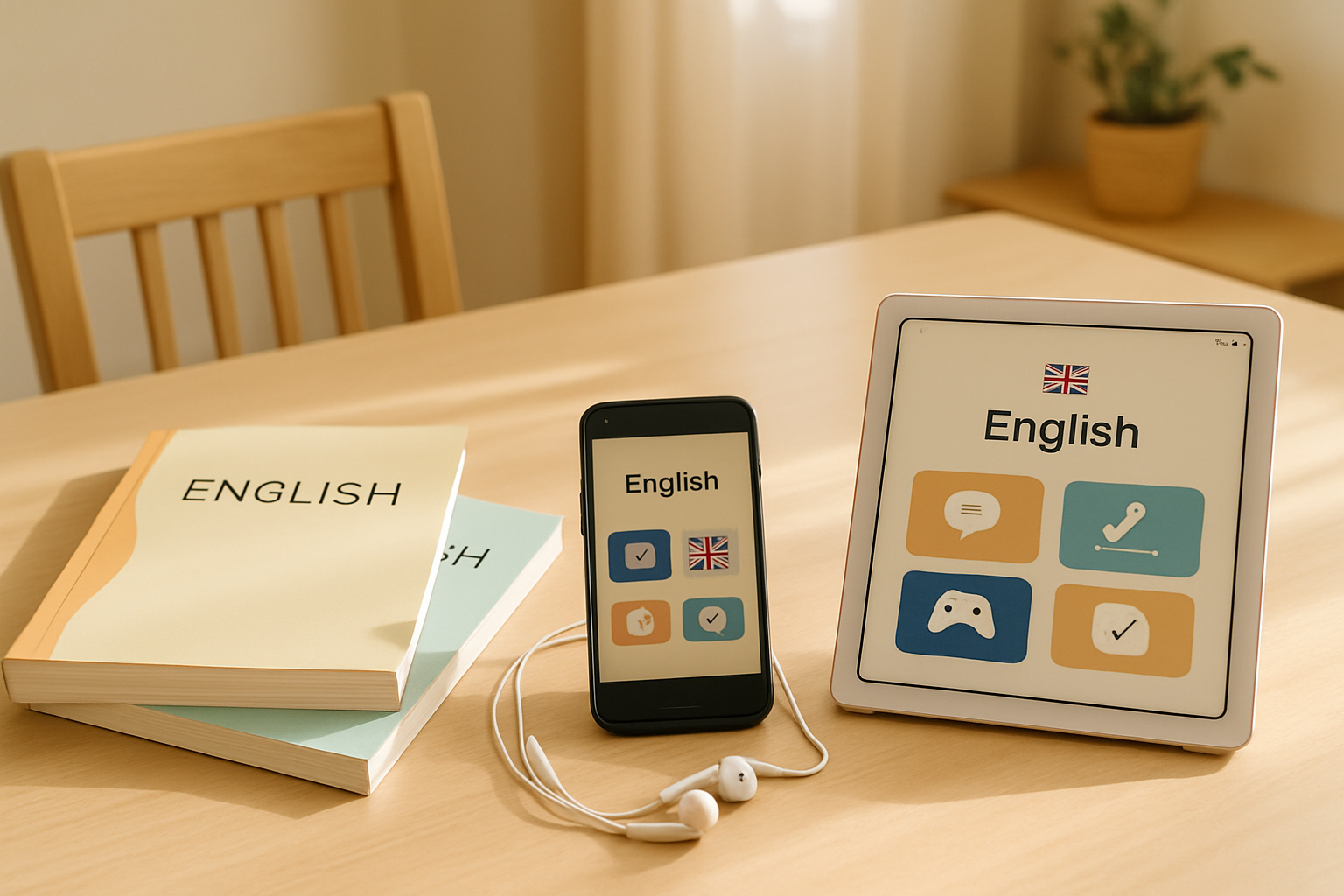
Paper English workbooks are the learning method parents themselves grew up with. The child writes by hand and solves problems at a set pace, studying step by step. Visiting-teacher workbooks, where a teacher comes to the home once a week to check progress and point out weak spots, are another familiar form.
Smart pad workbooks, by contrast, can naturally include audio and video that are hard to use with paper workbooks, and can immediately check results so the child repeats missed problems and fills weak spots.
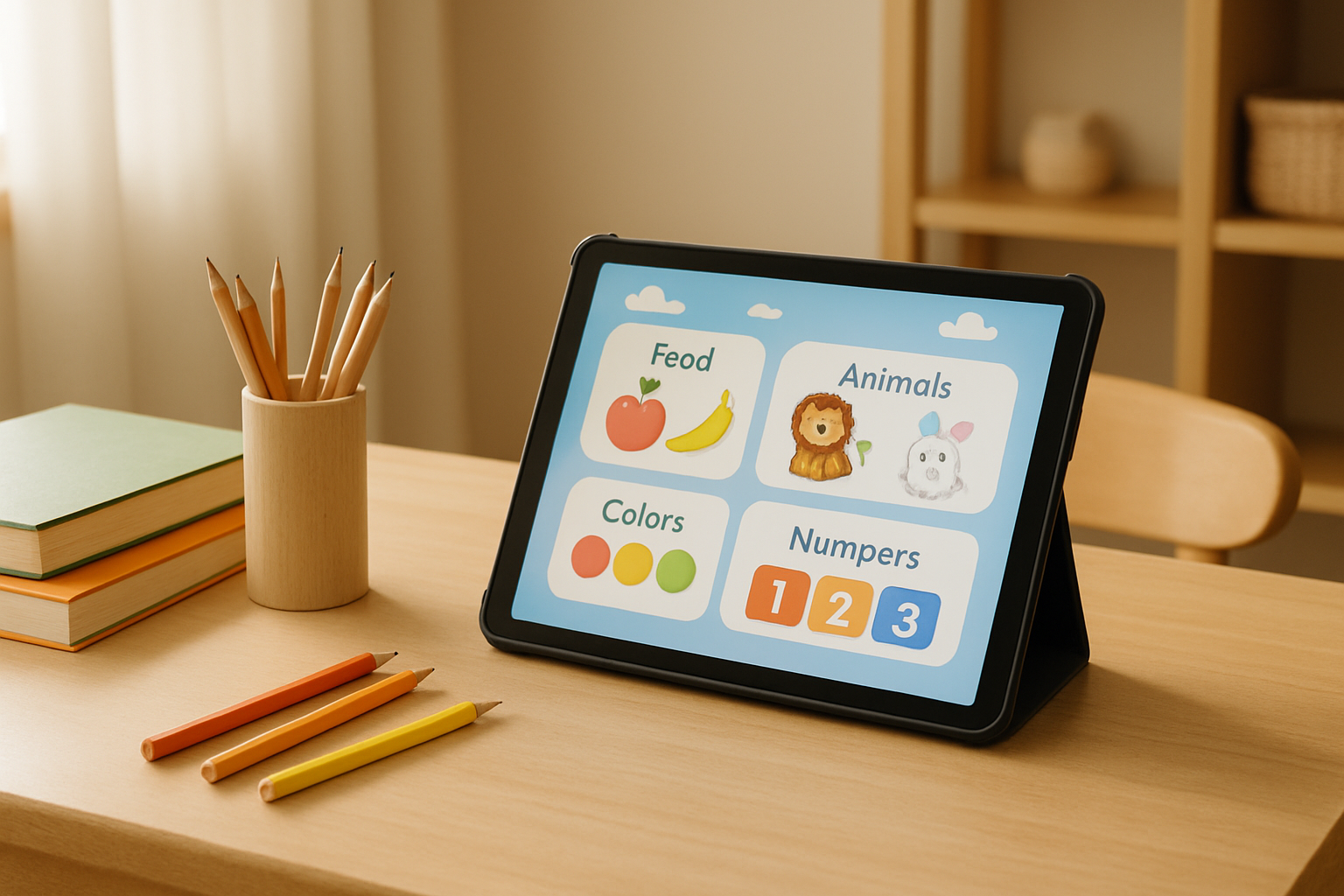
Elementary English has limits to balanced progress when studied only by reading with the eyes. The six areas of English, reading, listening, speaking, grammar, vocabulary, and writing, need to be practiced together. For a child who needs activities that respond directly to sound, a smart pad workbook is a good fit. Cats English is a 1:1 personalized elementary online English smart pad workbook that teaches the six areas of English within the pad and immediately reflects weak spots in the next curriculum.
Traditionally, a workbook meant a paper workbook studied on printed materials, but with advances in technology many children now use smart pad workbooks on a tablet. So how do the two methods actually differ in the learning process?
Paper workbooks suit learning where children write, read, and solve problems.
Paper workbooks are a familiar English learning method used since our parents' generation. A representative form is one where the child solves a set amount directly and a teacher visits once a week to check progress and go over assignments. Many parents still choose them because the child can study steadily while reviewing the process together with a teacher.
Recently, however, more families are looking for a learning method that goes beyond once-a-week management, managing the child's learning every day and letting them practice the various areas of English in a balanced way.
Smart pad workbooks are not limited to reading and writing; they develop all areas evenly, including listening and speaking.
English is a subject where sounds and letters must be learned together. Given this nature, a smart pad is a tool well suited to evenly practicing all areas of English every day. The child can read sentences on screen, hear native-speaker audio immediately, and even record and evaluate what they say.
Of course, having video alone, or simply spending a long time looking at a screen, is not in itself good. What matters is what learning process follows after watching, whether review of missed items follows, and whether what was learned in reading and listening is brought out into other activities such as speaking and writing. You should look at how much of the learning process actually lets the child respond proactively and take the lead.
The two workbook types can be distinguished like this
Paper workbooks have the advantage of steady, familiar learning where the child writes by hand and solves problems. But since English also requires listening, speaking, and repeated practice, how conveniently the learning process provides and manages these also matters.
In this respect, smart pad workbooks can be a way to manage English learning more efficiently, in that listening, speaking, repeating missed items, and personalized study based on results can all continue in one place.
| What to check | Paper English workbook | Smart pad English workbook |
|---|---|---|
| Learning traces | Writing and corrections remain on paper | Learning records and results accumulate as data |
| Sound learning | Audio or lessons must be connected separately | Listening and pronunciation activities run inside the program |
| After grading | Parents track missed answers and re-study directly | Automatic grading can lead into repeated practice |
| Activities covered | Easy to build around reading and writing | Easy to include listening, speaking, and interactive activities |
| Amount management | Set pages solved in order | Order can be arranged to match level and learning records |
Look at the experiences only a pad workbook can provide
First is immediate response. When the child chooses an answer or speaks, they see the result right away and move to the next activity, and the results are reflected in the curriculum that follows. Learning flows organically even without parents managing it every time.
Second is an automatic repetition structure. It does not stop at marking a missed problem once; the same concept can be extended into different problems the child meets again. You can build a structure where weak spots are practiced repeatedly and supplemented even without personally tracking the child's review.
Third is the connection of the six areas of English. It does not end at seeing a word and guessing its meaning; it can widen into hearing the sound, reading the sentence, then speaking and writing it directly. Since studying easily tilts toward reading and vocabulary, you should check whether this organic connection is actually included in the pad workbook's curriculum.
Fourth is the connection of learning records. With paper workbooks a person must read and analyze the written traces directly, but pad workbooks can immediately reflect activity completion and results in the next study. What matters more is whether a structure is actually in place where weak points in the learning process lead into repeated practice and assessment.
Fifth is that training to hear a sound and respond can happen without a time gap. Without hunting for audio separately, the child can hear a sentence and answer or read along right away, narrowing the gap between listening, reading, and speaking activities and linking them into immediate use.
That said, having many such features does not by itself mean good learning. What matters is checking whether it is designed so the child naturally completes the needed process from main learning through repeated practice and assessment, rather than a format where the child picks only the content they want.
How is Cats English’s smart learning organized
Cats English is an elementary online English program that teaches like an English academy at home. A level test sets the child's personalized starting stage, and the six areas of reading, listening, speaking, grammar, vocabulary, and writing are covered within one curriculum.
The main learning flows through warm-up, cognitive learning, personalized repeated practice, and assessment with reinforcement. The focused practice app introduced on the official homepage has 5,807 types and 42,026 sections. It is organized so learned content is brought out again in many ways, such as words, sentence listening, repeated reading, sentence completion, and game-style activities.
Separately from the main learning, in the 1:6 live class the child reviews the six areas from previous study, is assessed, and receives feedback. On top of this, conversations with Foxley, an AI English friend, increase the child's chances to encounter and speak English at least a little every day.
When choosing, look at the learning flow rather than whether there is a pad
Whether or not there is a smart pad is not the criterion for choosing. The core is the learning system. You should look at whether, after watching a video, activities follow where the child directly speaks, listens, reads, and responds. Check whether it is skewed toward the reading drills that Korean-style learning easily leans into, and whether all six areas of English, reading, listening, writing, speaking, grammar, and vocabulary, can be studied.
Cats English does not end at watching and listening; it continues into output learning where the child speaks directly, repeats, and brings out what was learned. Missed content is reviewed across the six areas and reflected in the four-stage main learning spanning warm-up, cognitive learning, personalized repeated practice, and feedback with reinforcement, so the curriculum is adjusted to fit.